Piano
The complete instrument: melody, harmony and rhythm under ten fingers. Begin through play, grow through repertoire, and move toward internationally recognised Rockschool or Trinity grades.
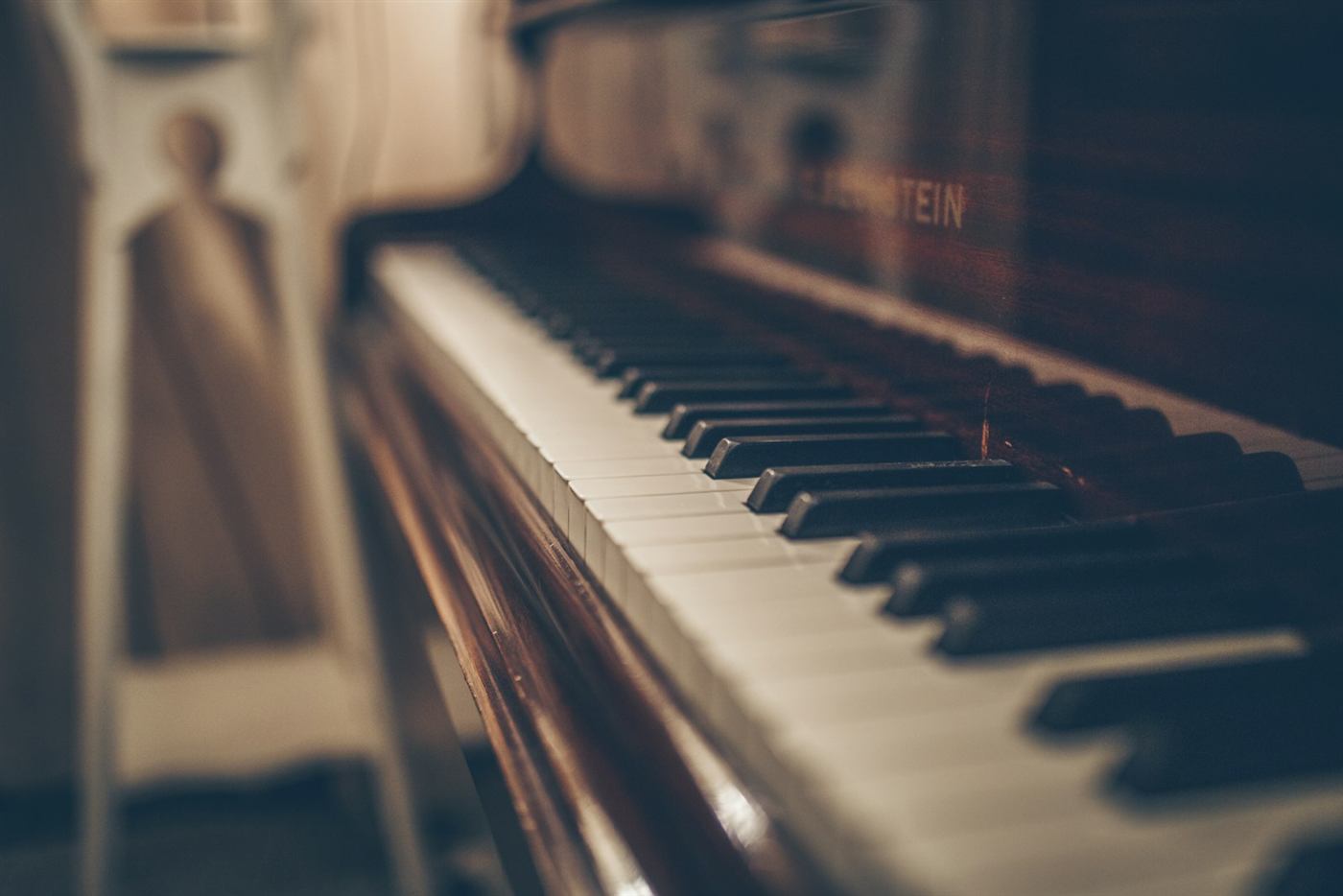
The first note should already feel like music.
Piano lets a young learner see the whole map. Every pitch is in a straight line, no tuning stands between intention and sound, and two hands can become an orchestra. Our lessons turn that clarity into deep musicianship—not mechanical exercise.
A key begins a chain reaction.
Choose a component to separate the mechanism. A pianist never touches the string directly: the hand sets a small wooden machine in motion, and that machine translates weight, speed and release into tone.
The key is a lever. A relaxed arm sends energy through it; controlled release prepares the next sound.
From finding middle C to shaping a complete performance.
- 01
Foundation
Young beginners learn keyboard geography, steady pulse, singing before playing and a balanced hand through short pieces and musical games. Adults begin with the same essentials, using age-appropriate repertoire and direct explanations.
- 02
Coordination
Hands begin independent roles. Learners connect reading to sound, build major and minor patterns, pedal cleanly, voice a melody above accompaniment and play complete pieces without losing the beat.
- 03
Fluency
Scales become tools rather than tests. Chord inversions, sight-reading, ear work and stylistic articulation support classical miniatures, film themes, pop arrangements, jazz-influenced harmony and graded repertoire.
- 04
Interpretation
Advanced learners plan phrasing, tone, rubato and structure; solve technical passages intelligently; and prepare polished programmes. Rockschool or Trinity Grades 1–8 are available when certification fits the learner’s goal.
“Technique is not the destination. It is the door that lets expression walk in.”Brooks Piano Studio · Contemporary + Classical
Listen. Build. Perform.
First, we listen and reset. A teacher checks posture, pulse and the week’s discoveries, then isolates one useful problem: perhaps a tense thumb, an uneven rhythm or a phrase with no direction.
Next, we build a transferable skill. Technique, reading, aural work and theory are connected to the current piece, so a scale explains harmony and a rhythm exercise fixes an actual musical passage.
Finally, we perform. The learner plays a longer span without interruption, reflects on what changed, and leaves with two or three precise practice targets—not a vague instruction to “play it again.”
Piano questions, answered clearly.
A trial is a chance to hear the instrument, meet a teacher and understand the route ahead. Bring your questions and, if you already play, one familiar piece; no prepared audition or prior theory is expected.
Is age four genuinely suitable for piano?
Yes, when lessons use short activities, singing, movement and simple keyboard patterns. Readiness matters more than reading ability: a child should be able to follow a brief instruction and enjoy repeating a game.
Do we need an acoustic piano at home?
No. A touch-sensitive digital instrument can support a beginner well; weighted full-size keys become increasingly valuable as control and repertoire develop. A teacher can help you assess an existing instrument before you buy anything.
Classical or contemporary—must we choose immediately?
No. Both routes share reading, rhythm, ear, coordination and expressive touch. Early repertoire can mix styles; a clearer Rockschool or Trinity direction can emerge when the learner’s tastes and goals become visible.
What if the learner has already studied elsewhere?
We begin with a friendly diagnostic lesson: a familiar piece, some reading, ear work and a conversation about prior learning. The aim is to preserve strengths, identify gaps and choose the right next level without unnecessary repetition.
How do online piano lessons work?
A stable device placed to show the hands and keyboard lets the teacher demonstrate, listen and annotate in real time. Online study works best with a quiet setup, reliable connection and an instrument available between lessons.