Orient
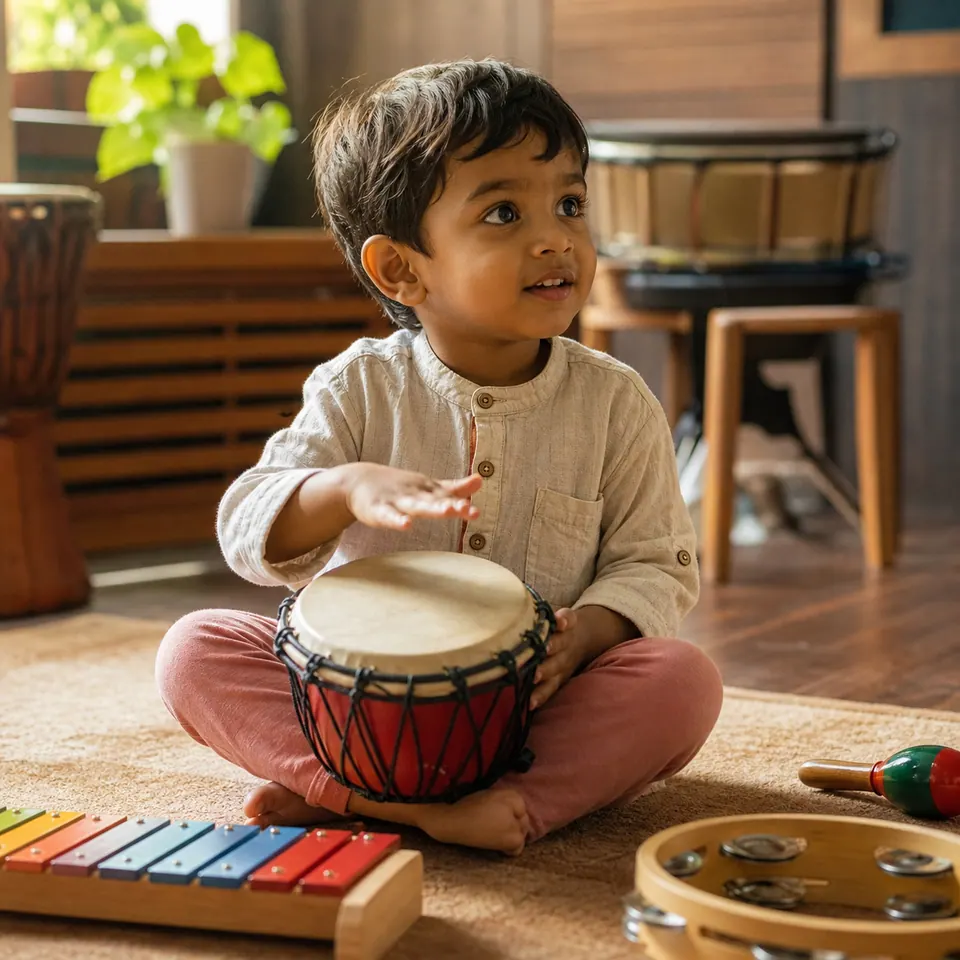
Meet the instrument, make a comfortable sound and learn the small physical habits that prevent tension. Short musical wins establish pulse, pitch direction and a reason to return.
Not a catalogue to scroll past. A collection to listen into. Hover over a sleeve, cue its sound on the console, and discover the instrument that feels unmistakably yours. Taught at our six Chennai branches—Anna Nagar, Kattupakkam, OMR (Thalambur), Iyyapanthangal, Perumbakkam and Porur—and live online for students anywhere in the world, including every city in India.
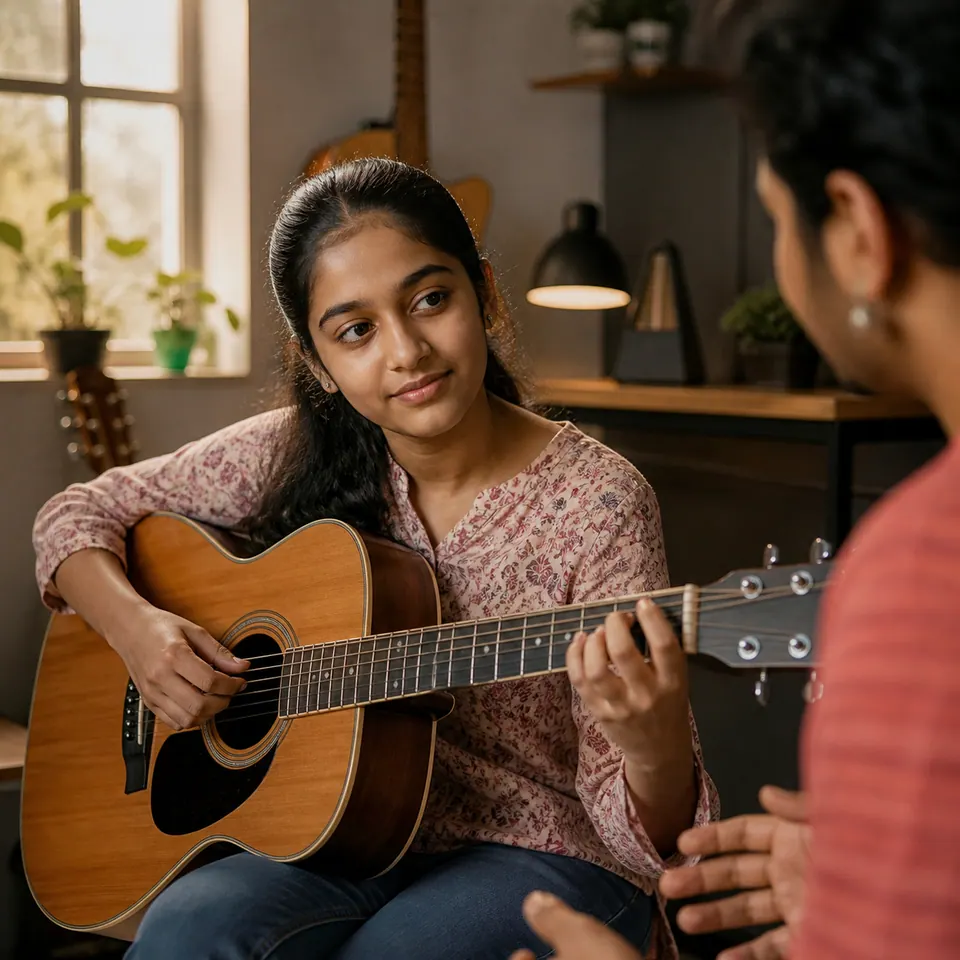
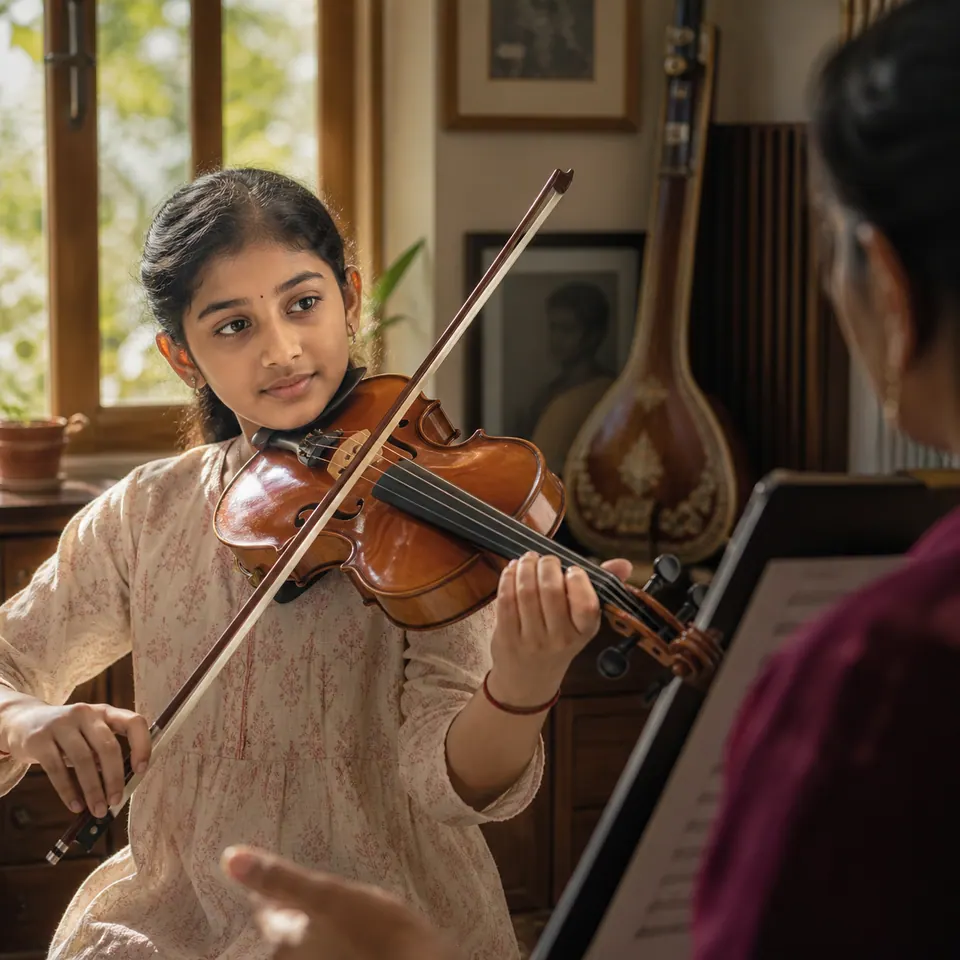
Do not begin with the instrument you think you should learn. Begin with the musical experience you want more of. Select a signal and the galaxy reorganises around a route: a strong all-round foundation, favourite songs, physical energy, original ideas or the feeling of making music with other people.
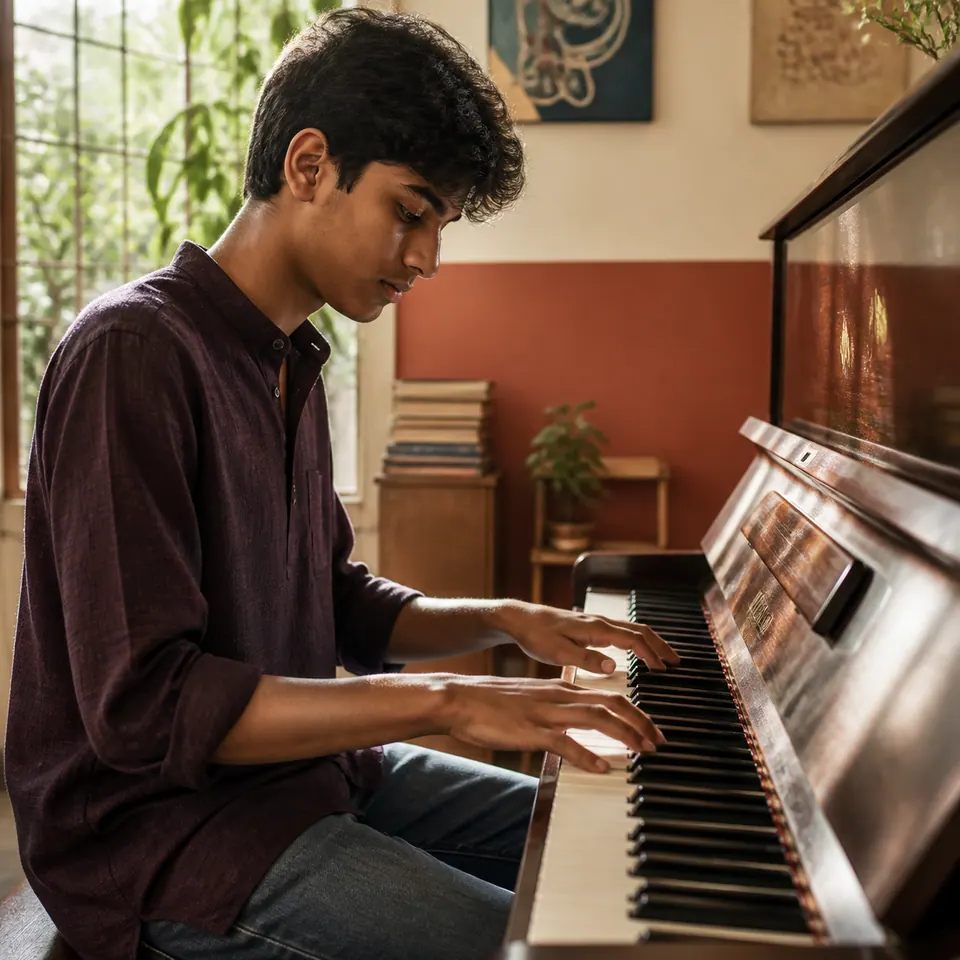
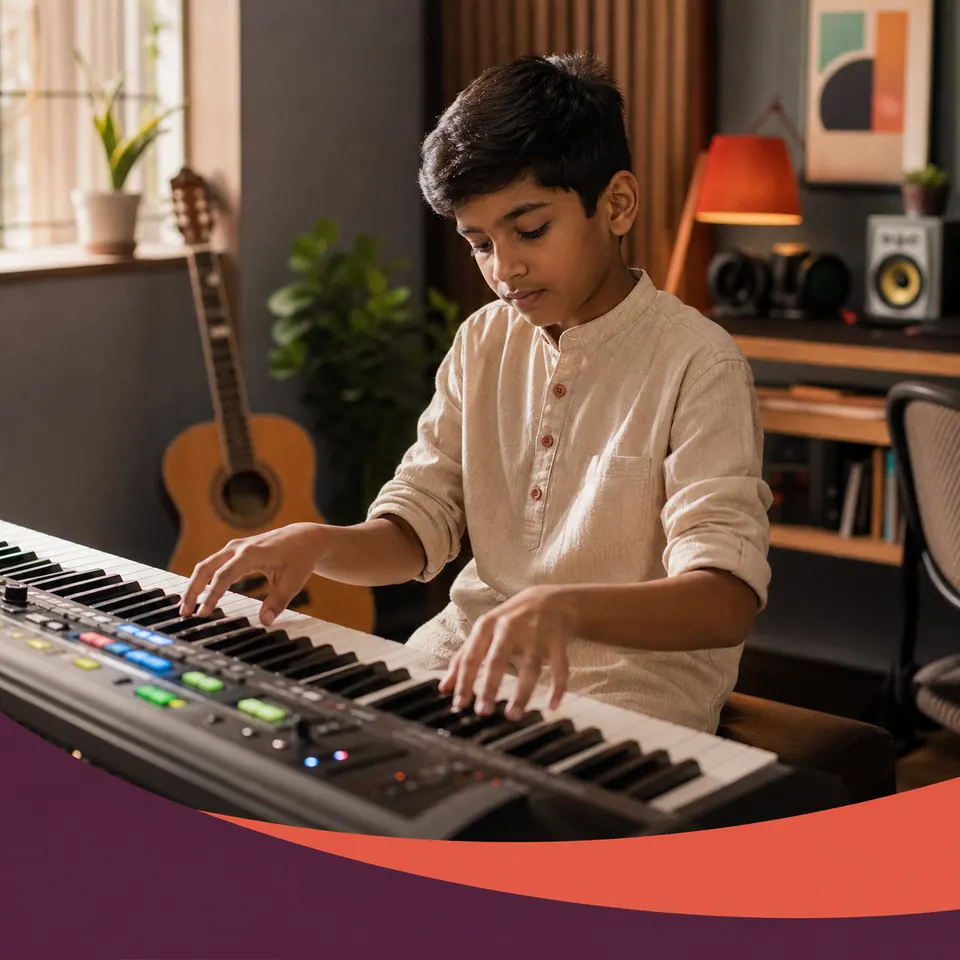
Piano places melody, bass and harmony beneath both hands. It is especially useful for learners who want a broad foundation, clear visual patterns and the freedom to move later into composition, accompaniment or another instrument.
Explore piano →Progress is not a race through songbooks. The route loops between technique, listening, reading and expression, with each pass becoming more independent.
Meet the instrument, make a comfortable sound and learn the small physical habits that prevent tension. Short musical wins establish pulse, pitch direction and a reason to return.
Technique joins repertoire. Learners begin to read familiar patterns, hear when something changes and understand why a chord, bowing, fingering or rhythm produces its effect.
Instead of merely reaching the correct notes, students shape phrases, control tone and make stylistic choices. Recording and performance become tools for reflection rather than tests of worth.
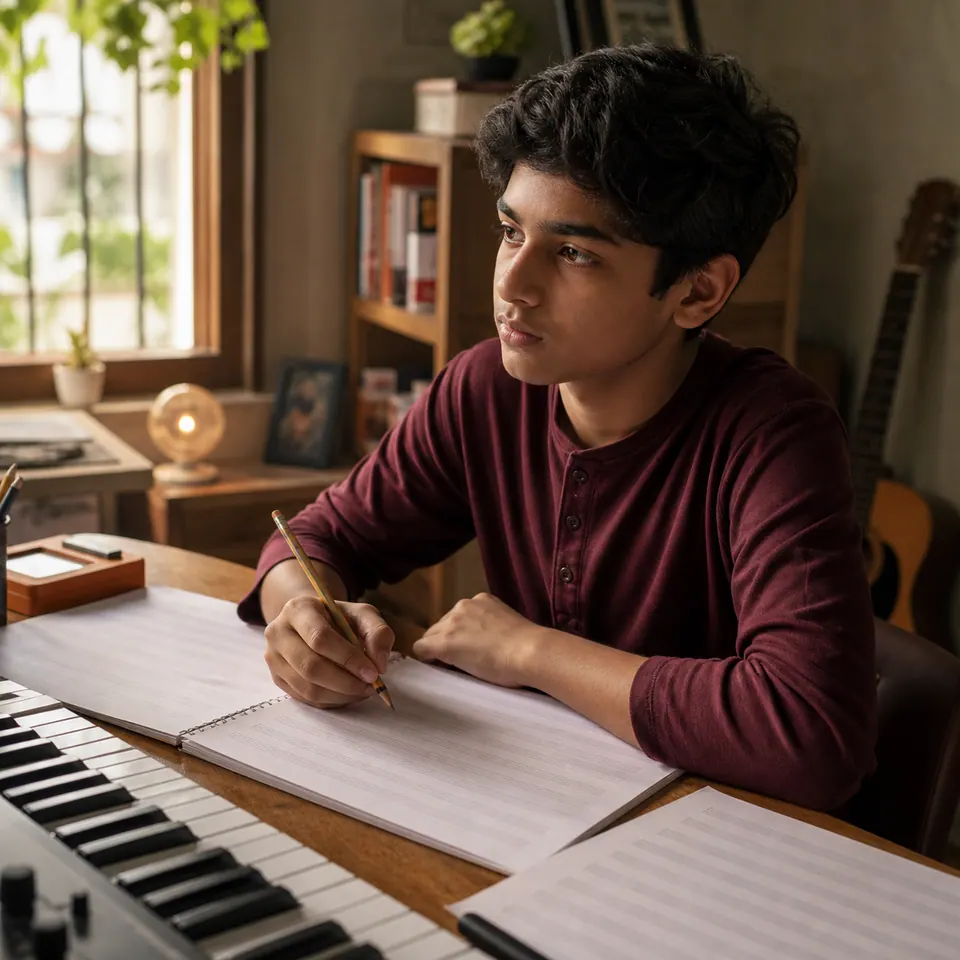
Independent practice, repertoire choices and creative work take a larger role. Some learners pursue graded examinations; others build a performance set, compose, accompany or play socially.
A familiar piece, rhythm or vocal warm-up lets the teacher see what has settled since the previous lesson. The opening is diagnostic without feeling like an inspection.
One precise idea—hand balance, breath, bow path, chord change, coordination or notation—is slowed down, demonstrated and tested in more than one way.
The new tool returns immediately to a song or piece. This is where technique earns meaning and where a learner discovers that control creates more expression, not less.
The learner finishes knowing what to listen for at home, what a successful repetition feels like and which small section deserves attention first.
Effective home practice is specific: a few deliberate repetitions, a pause to listen, then another attempt with one variable changed. Beginners benefit from a ready instrument, a visible reminder and an adult who asks what they discovered rather than how long they practised. Older students learn to mark difficult transitions, record short takes and separate “fixing” from simply playing for pleasure.
There is no universal instrument setup. During a trial, the teacher can discuss size, seating, basic accessories and whether an acoustic, digital or borrowed option is suitable before a family commits to equipment.
The trial is where age, reach, previous experience, attention style and musical taste become a real recommendation—not a generic eligibility rule.
Talk to a teacher →Bring both interests to the trial request. We can compare the physical feel, early learning curve and kind of music each route makes possible. The best choice is the one the learner is curious enough to meet repeatedly.
No. Reading grows alongside listening and playing. Early lessons use patterns, imitation and sound before notation becomes a useful map of music the learner already understands.
Yes. A graded pathway can give structure and recognition, while repertoire, ear work, improvisation and musicianship keep the programme wider than a syllabus.
Often, provided the camera shows the relevant posture or technique and the home setup supports clear sound. The trial helps determine whether online or studio learning is the stronger fit.
That is normal development, not failure. Teachers can refresh repertoire, introduce a new goal, connect theory or ensemble work, or help plan a thoughtful transition between instruments.
A lesson shaped like a person, not a timetable.