Look closely
We notice shape, colour, texture and the choices hidden inside everyday things.
Technique gives imagination somewhere to go. Our live drawing, painting and making sessions give young artists real tools, adventurous prompts and the confidence to create work that looks like nobody else’s.
Try the interactive studio ↓Choose a paint, change your brush, then draw with a mouse, finger or stylus. Try the “scatter ideas” button when the blank page feels too quiet—creative confidence often begins with one unexpected mark.
Art is not one skill called “drawing.” It is a conversation between observation, material and decision. Open a drawer to see how one visual question travels through a medium—and the kind of project that can make the technique memorable.
Pressure, speed and direction turn one pencil into a vocabulary. Students might build a field guide of invented objects, moving from measured contour to expressive marks.
Tap a labelled drawer. Objects emerge; the brief changes.
Every prompt teaches a real visual idea—then leaves room for personal decisions.
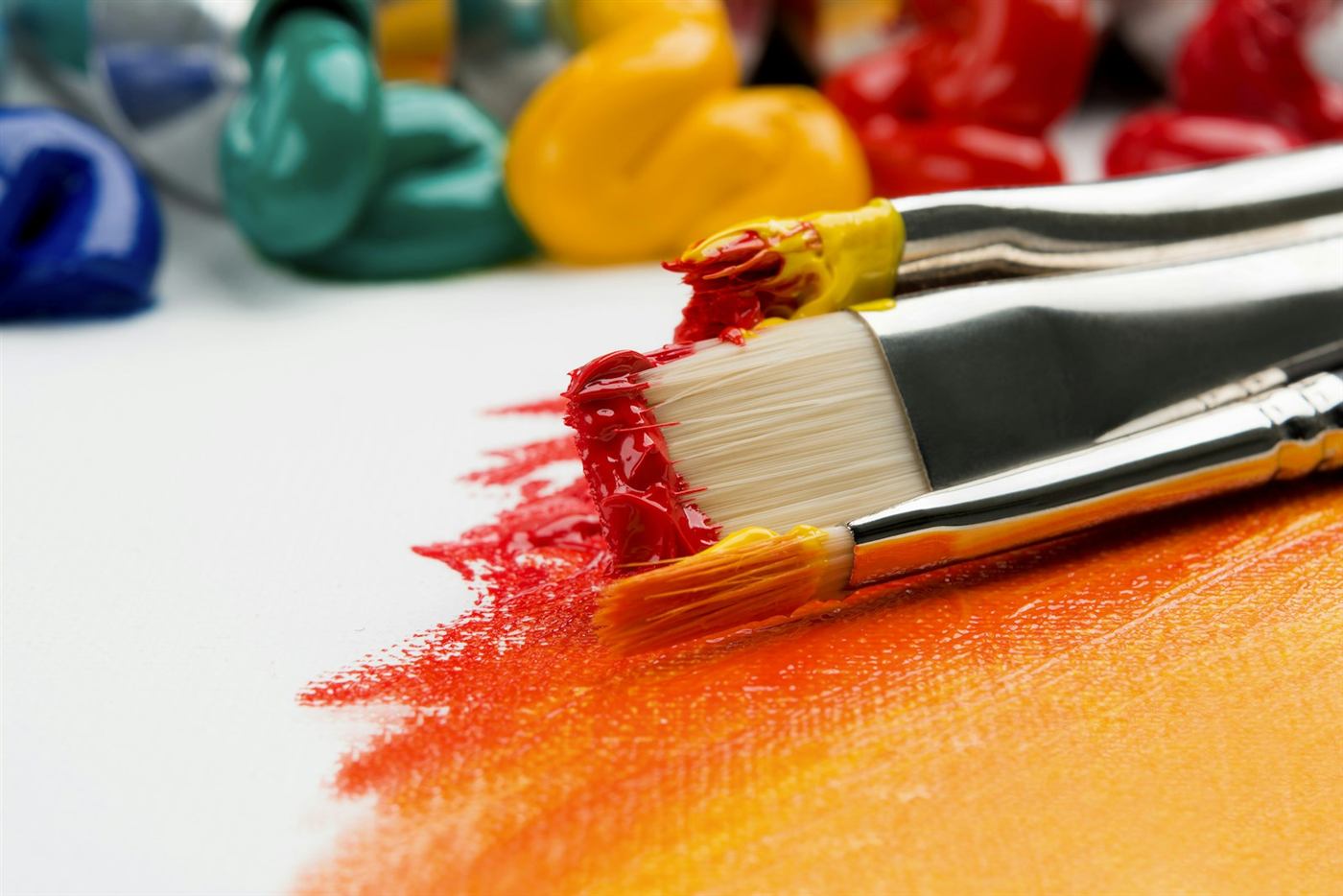
We notice shape, colour, texture and the choices hidden inside everyday things.
A focused demonstration makes technique feel possible, not mysterious.
Students make the prompt their own instead of copying one “correct” finished piece.
We learn to talk about decisions with curiosity, never judgement or comparison.
Projects revisit core ideas at increasing depth. A beginner may explore silhouette through cut paper; later, the same learner studies negative space, composition and visual rhythm in a more self-directed piece.
Students train the eye to compare angles, intervals, colour temperature, texture and light. Observation is framed as active curiosity rather than an ability some people simply possess.
Typical evidence · studies, viewfinder crops, texture mapsDemonstrations introduce material behaviour: mixing without mud, building value, joining paper cleanly, controlling water or using an eraser as a drawing tool. Technique expands choice.
Typical evidence · swatches, process sheets, material testsForeground, scale, balance, rhythm and contrast help separate a collection of nice parts from an image that leads the viewer. Students test thumbnails before committing.
Typical evidence · alternate layouts, colour plans, revisionsA shared brief gains a personal rule, story or visual constraint. Students learn that originality is not magic; it grows from making specific decisions and following them further.
Typical evidence · personal series, mixed-media narrative, design objectArtists select work, explain intent and identify the next experiment. Feedback describes what a choice does before suggesting what might become clearer or more surprising.
Typical evidence · artist note, portfolio edit, informal displayA home studio does not require expensive materials or a permanent room. A portable box with plain paper, pencils, an eraser, safe adhesive, a few colours and scrap material is enough to keep the barrier to starting low. Protect the surface, make clean-up predictable and let work-in-progress survive between sessions when possible.
Between classes, useful practice can mean making five versions of one shape, photographing interesting shadows, collecting a colour family or finishing one area with greater care. Copying an image can train coordination, but students are also encouraged to change the crop, combine references and draw from observation so the work does not become dependent on step-by-step templates.
Over time, learners can collect finished work alongside sketches, tests and reflections. That wider record makes growth visible: closer observation, cleaner control, bolder composition and more independent problem-solving.
No prior drawing ability is expected. A willingness to look, test and speak about choices matters more than arriving with a recognisable style.
Projects can deepen through more demanding references, material constraints, composition studies and longer personal work rather than simply producing more of the same.
Share any portfolio, school-project or presentation aim before the trial. The team can explain how regular creative development may support it without promising a standardised outcome.
Live online teaching works well when the camera can show both the working surface and the learner’s view. Material lists should stay practical and be confirmed before a project begins.
No. A shared technique or visual problem may begin the session, but learners make choices about subject, layout, palette, story and material so results can diverge meaningfully.
Students learn to diagnose whether a mark needs correction, transformation or simply a neighbouring decision that makes it work. Starting again is one option, not the automatic response.
Yes. Cutting, folding, joining and constructing develop planning, spatial reasoning and material intelligence. Craft can also carry illustration, pattern, storytelling and design.
Wait for guidance based on the learner and delivery format. A small reliable kit is more useful than a large collection of unfamiliar supplies, and many prompts intentionally use ordinary paper or found material.
Making provides a natural focus, so conversation does not have to lead. Teachers can invite reflection through choices, pointing, comparison and short descriptions while confidence develops.
Also in this strand
The same room, a different instrument. Public speaking sits alongside arts and crafts because both teach a child to put something of their own in front of other people and stand behind it.
Taught in small groups in our Chennai studios and live online, from age eight.