Flute and saxophone classes in Chennai: finding your wind
Wind instruments teach a visible lesson: sound begins before the note. Breath, embouchure, posture and listening work together before a melody feels easy.
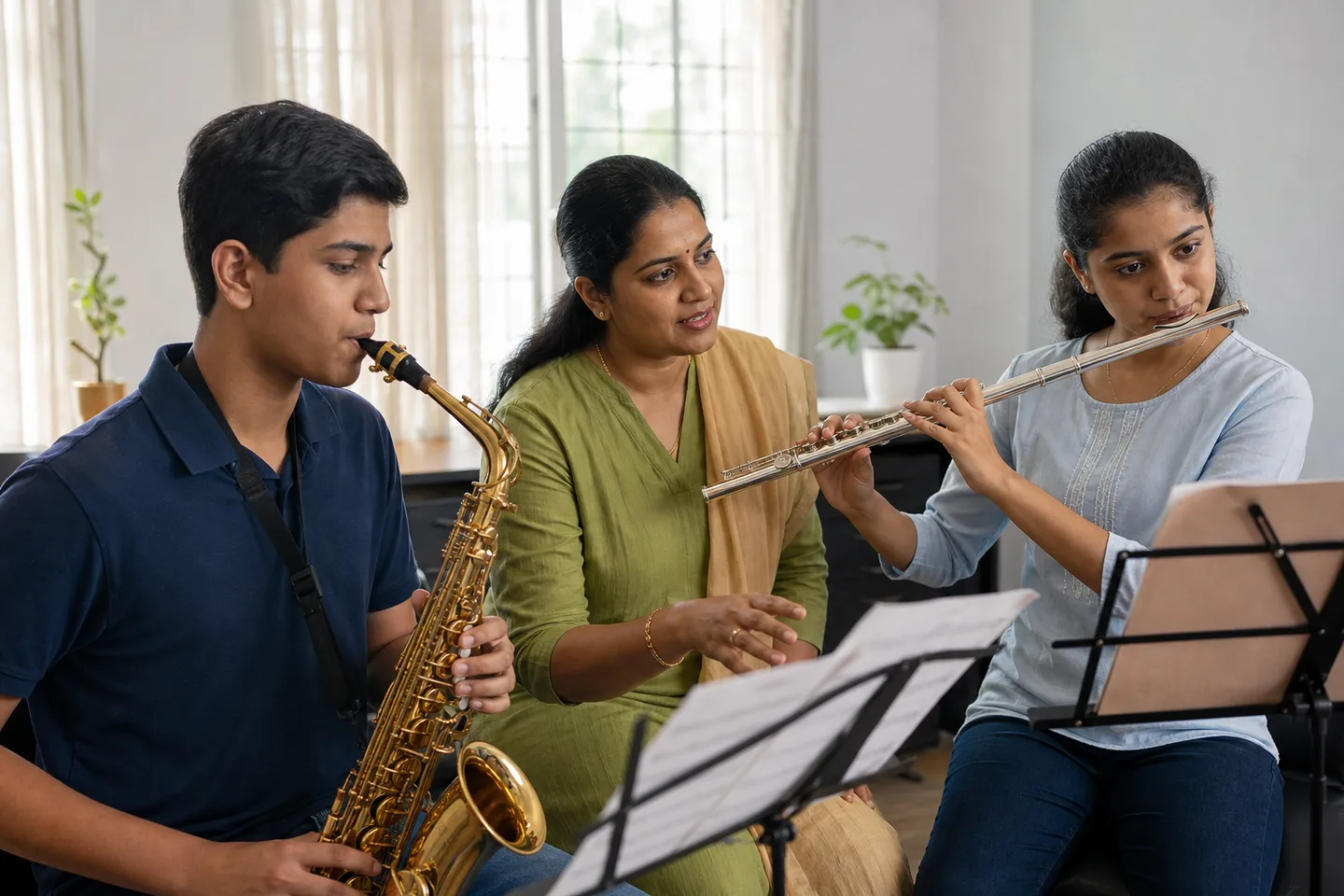
The first sound on a flute or saxophone may be airy, squeaky or wonderfully accidental. That is normal. Early classes focus on how to breathe without forcing, how the mouth and hands shape the instrument, and how to listen for a centred tone.
A child or teen does not need to arrive with powerful lungs. They need curiosity, a manageable instrument and a teacher who can make small changes feel understandable. Flute and saxophone ask for different physical choices, so trying both can be more useful than choosing from a photograph.
Local learners may also need to think about where they can practise comfortably around neighbours and family routines. A few careful long notes, a scale played slowly and one familiar tune are meaningful practice. For worldwide learners joining live online, a clear camera angle and a quiet room let the teacher hear and see the important details.
The goal is not to sound polished immediately; it is to notice what changed between one breath and the next. A free trial gives the learner a low-pressure way to discover whether flute, saxophone, trumpet or clarinet is the voice they want to keep exploring.