Carnatic vocal classes in Chennai: begin with sruti and listening
Carnatic music is not a race through a list of compositions. It is a relationship with sruti, a pulse you can trust, and a way of making a phrase feel alive rather than merely correct.
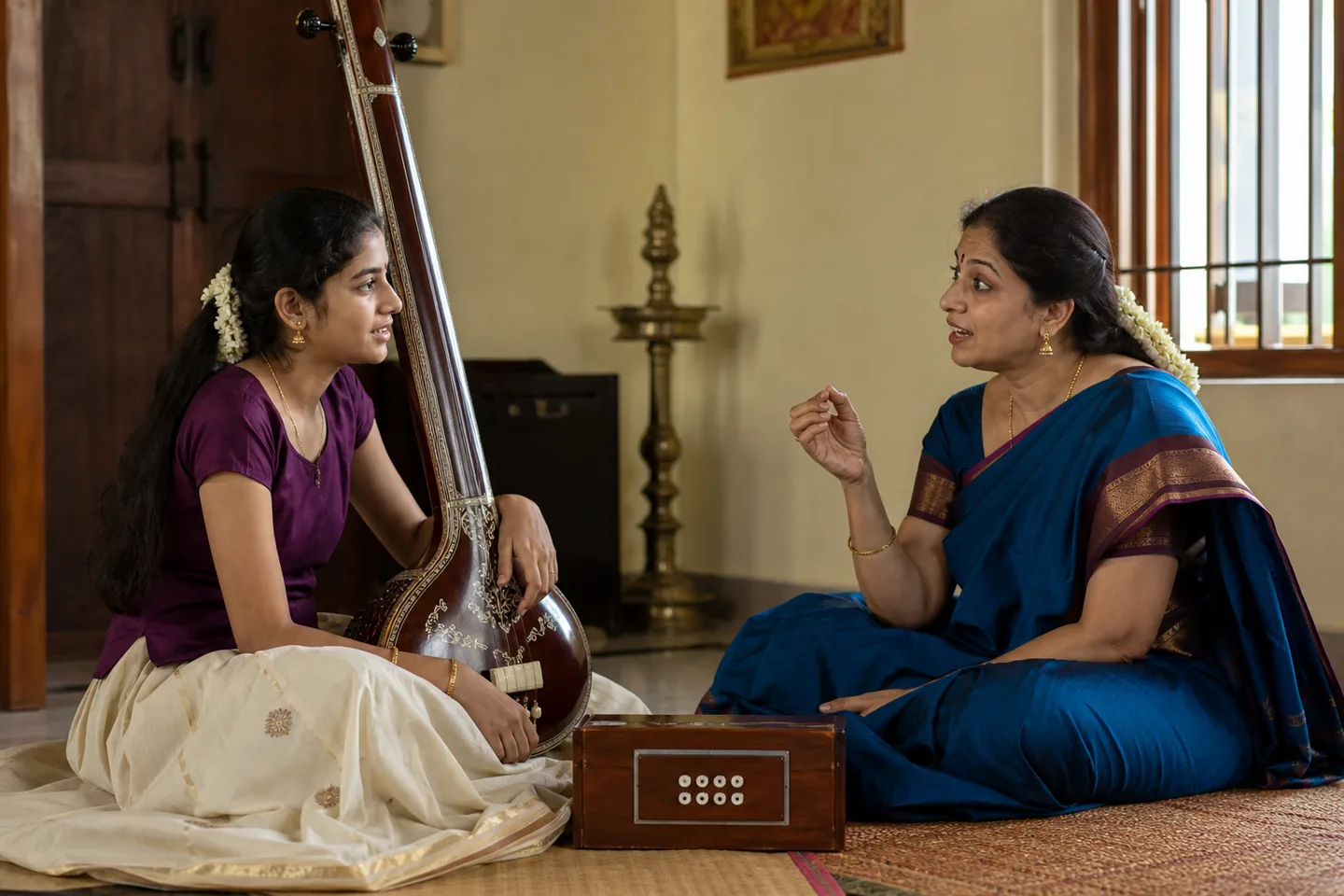
For a new Carnatic learner, the first landmarks are often simple and deep: finding the tonic, matching a note, keeping tala and hearing how a phrase returns. Swaras become easier to remember when the ear meets them before the page becomes crowded. A teacher may use a tambura reference, a call-and-response phrase or a familiar geetham to build that relationship patiently.
Families in Chennai may already have songs in their homes, while learners joining from overseas may be discovering the tradition through grandparents, recordings or a personal curiosity. Both are valid starting points. Practice can be brief and specific: sustain the sruti, repeat one phrase slowly, mark the tala and listen back without judgement.
As the learner grows, ragas, varnams and kritis introduce more detail, ornament and responsibility to the line. The aim is not to flatten Carnatic singing into generic vocal technique. It is to protect the character of the music while helping the student sing with steadier pitch, clearer pronunciation and growing confidence.
A trial class lets the teacher understand experience, language comfort and goals before suggesting a sensible path.